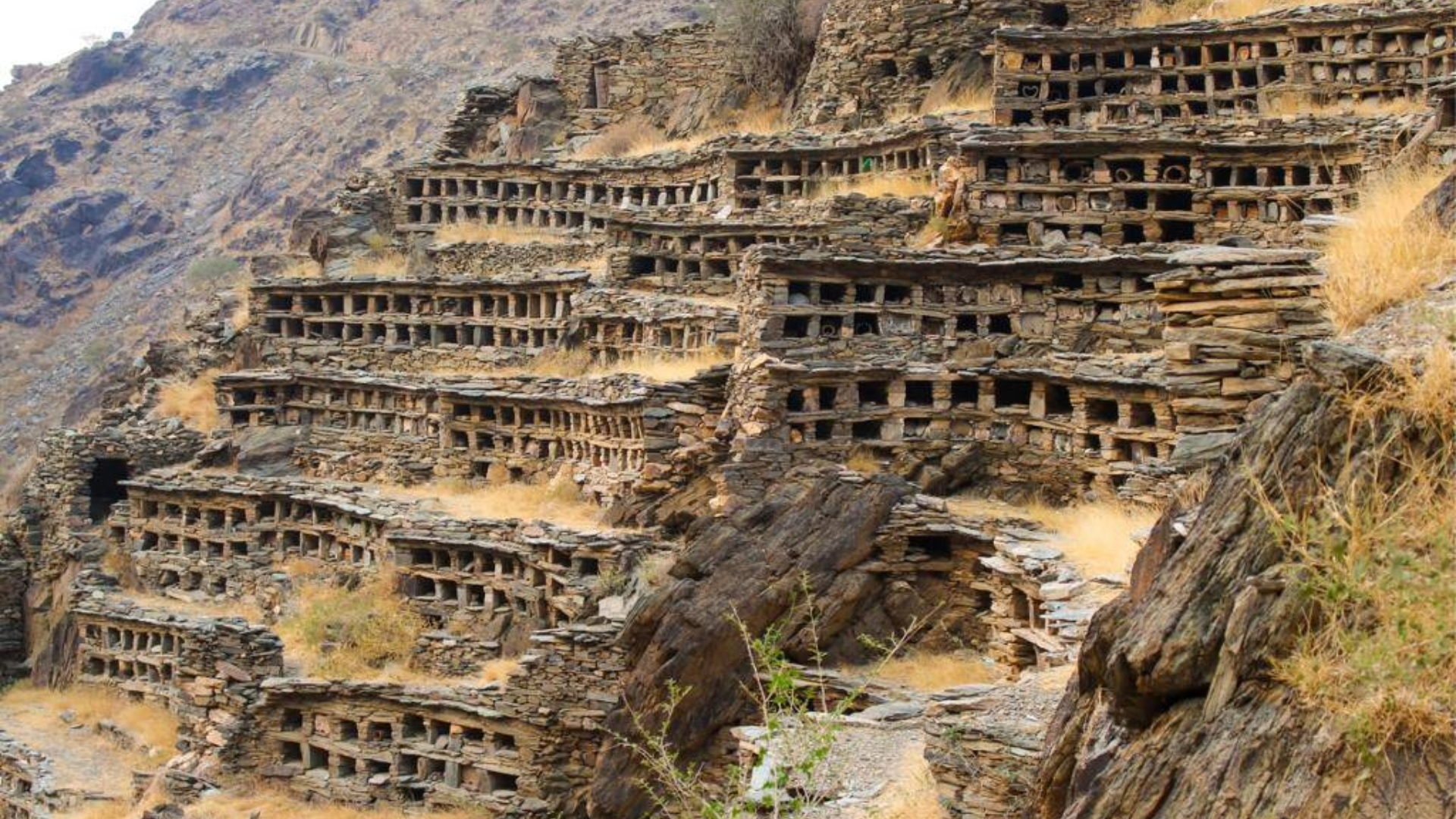
For Fahad, a local beekeeper, these beehives are more than history — they are life itself. Fahad has spent decades learning the delicate art of mountain beekeeping from his father and grandfather. Every morning, he climbs the rocky trails to tend the hives, carefully checking each stone structure, listening for the quiet hum of bees, and remembering the lessons of patience, care, and respect for nature passed down through generations.
Fahad often tells visitors that honey is more than food. It is memory and tradition, a connection to ancestors who relied on the land for survival. As he removes a comb and tastes the golden sweetness, he closes his eyes and imagines the families who built these hives centuries ago, wondering if they ever imagined their work would still feed people today.
The mountain winds carry the scent of wildflowers, and the hum of bees is the only sound for miles. Walking with Fahad, you feel the fragility and resilience of life intertwined — how humans and nature can coexist, how skills passed down through generations preserve not only survival but culture itself.
For Fahad, the ancient beehives are a reminder that heritage is not just in ruins or stones, but in the hands, hearts, and knowledge of people who protect it. Every visitor who leaves carries not only honey but a story of courage, care, and connection to a land that has sustained life for centuries.
Visiting the ancient beehives of Maysan is more than sightseeing. It is stepping into lives shaped by patience, love, and resilience — and leaving with the knowledge that human traditions, like honey, can endure for a thousand years and beyond.